
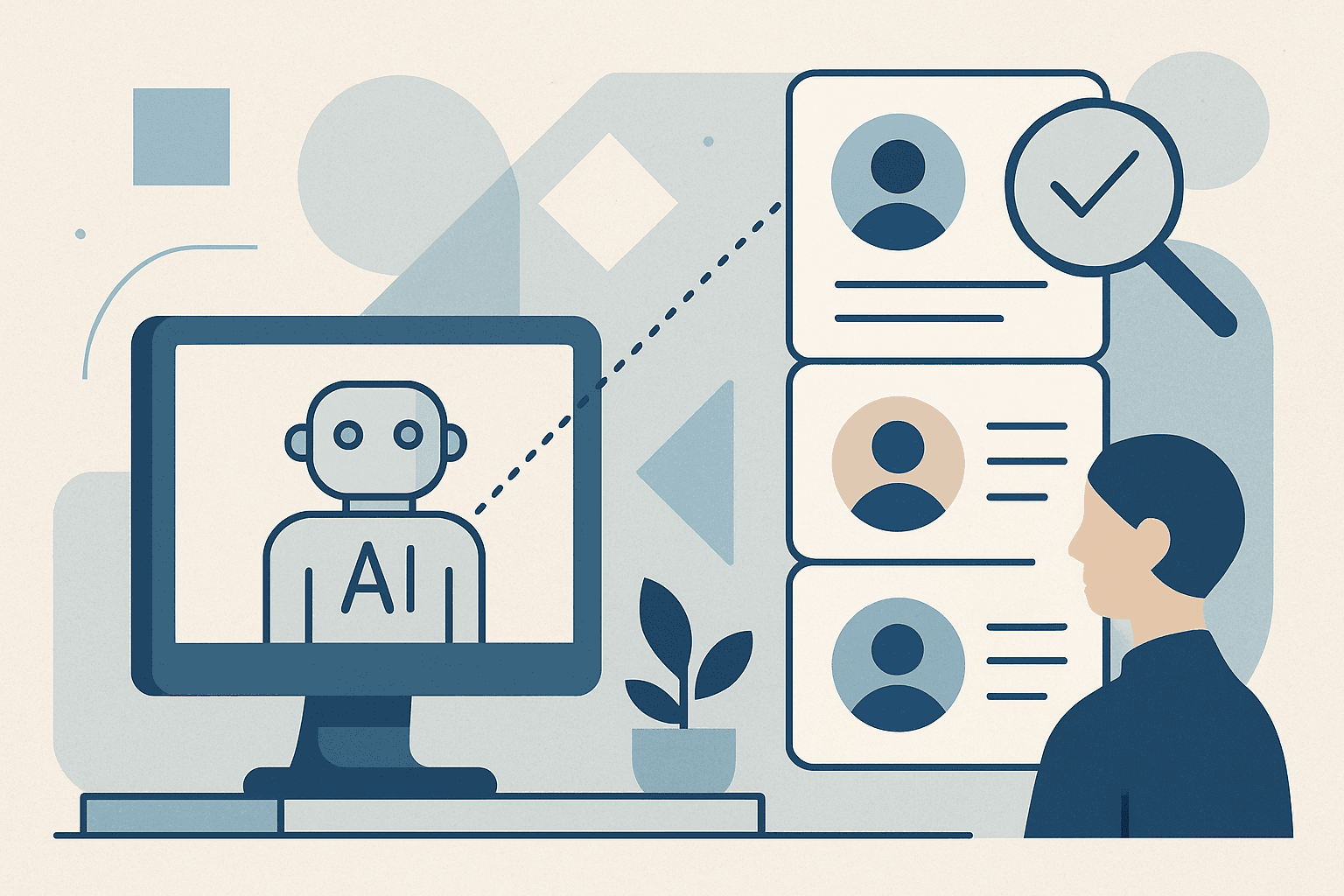
AI Lead Qualification for Small Teams: The Practical 2026 Playbook
Learn how small B2B sales teams can use AI lead qualification to cut manual triage, score prospects automatically, and close more deals in 2026.
Sales reps spend less than 36% of their time actually selling, the rest vanishes into manual research, data entry, and chasing leads that will never close. For a two- or three-person team, that math is punishing. AI lead qualification automates scoring, enrichment, and routing so lean teams focus only on prospects worth pursuing.
What Is AI Lead Qualification and Why Small Teams Need It Now
Studies of B2B sales teams consistently find that roughly 64% of a rep's working hours go to non-selling tasks: logging notes, researching prospects, formatting reports, and arguing with spreadsheets. For a founder-led or early-stage sales team, this statistic is not a benchmark to aspire to; it is a threat to the business. When your entire sales capacity is one or two people, every hour lost to administrative friction is an hour not spent closing revenue.
Small businesses represent the overwhelming majority of the commercial landscape. In Canada, small-business operational constraints are well-documented, and the SBA notes that the structural challenges facing lean teams, including limited staff, narrow budgets, and thin margins for error, make operational efficiency a survival requirement rather than a nice-to-have. In Canada specifically, businesses with fewer than 100 employees account for approximately 98% of all firms in the country. These organisations have no SDR bench, no RevOps function, and no data science team to absorb inefficiency.
The cost of a manually misqualified lead compounds quickly. A single unqualified prospect typically consumes 2 to 4 hours of rep time before the dead end becomes obvious: a discovery call that goes nowhere, a proposal sent to someone without budget authority, follow-up emails that bounce or get ignored. Multiply that across a month of inbound inquiries and you can see why unqualified leads routinely consume 30 to 50% of a small team's total pipeline capacity. That is not a productivity problem; it is a strategic one.
AI-powered qualification exists precisely to reclaim that capacity. By applying scoring logic and enrichment automatically, the system decides which contacts deserve human attention before a rep invests a single minute. The technology is accessible, it integrates with tools small teams already use, and it scales with the business rather than requiring additional headcount.
Defining automated lead qualification in plain terms
Lead qualification is the process of determining whether a contact matches your ideal customer profile and is likely to buy within a reasonable time frame. Qualification criteria typically span three dimensions: does this company fit your target market (firmographic data such as size, industry, and geography), has this person shown relevant behaviour (clicking pricing pages, downloading case studies, requesting a demo), and have they declared intent through direct signals like filling a contact form or responding to outreach.
Automated lead qualification means that software applies scoring rules or machine-learning models to incoming prospect data instead of a human doing it manually. The process runs in the background, continuously, and produces a scored and prioritised lead record before a rep ever opens their inbox. The result is that human judgment is reserved for the decisions that actually require it.
How AI qualification differs from traditional manual scoring
Traditional lead scoring in 2025 and earlier typically meant a spreadsheet or a CRM field populated by opinion: "this contact works at a large company, so give them 10 points; they opened our email, so add 5 more." The weights were static, assigned once by a sales manager, and never revisited unless someone remembered to revisit them.
Predictive lead scoring is fundamentally different. A machine-learning model ingests historical closed-won and closed-lost data and identifies which combinations of firmographic and behavioural signals actually predicted a closed deal. The weights are probabilistic, not arbitrary, and the model updates as new deal data accumulates. By 2026, even entry-level tools offer some form of adaptive scoring that a rule-based system simply cannot replicate. The practical implication is that a model trained on your own deal history will outperform any spreadsheet within a few months of deployment.
Why small teams feel the pain of unqualified leads more acutely than enterprise
Enterprise organisations absorb inefficiency through scale. An SDR team of 20 can afford a 10% hit rate on outbound prospecting because the volume makes up for the waste. A 3-person team operating on a tight monthly target cannot afford that luxury. Every hour a founder or account executive spends on a low-fit prospect is an hour that is not being spent on the two or three deals that will actually move the needle this quarter.
Without qualification tooling, small teams typically close roughly 1 in every 10 to 15 unfiltered inbound leads. That ratio is not a failure of sales skill; it is a predictable outcome of applying indiscriminate effort across contacts of wildly varying fit. The 98% of Canadian businesses operating with lean headcounts have no structural mechanism to absorb that waste the way a larger organisation might.
You can see how Outport AI approaches this problem for lean teams and understand why the design principles of a good qualification system always start with the constraints of a small, focused team rather than an enterprise deployment.
What does an AI-powered lead qualification workflow actually look like end-to-end?
A fully automated qualification loop moves through five concrete steps:
- Lead enters the system via an inbound web form, an ad click, a cold email reply, or a list import. The contact record is created in the CRM with whatever data the source provides, which is often incomplete.
- AI enriches the contact record by querying third-party databases to append firmographic data, technographic details, LinkedIn profile information, and revenue range. This step transforms a name and email address into a complete prospect profile within seconds.
- The scoring model assigns a qualification score based on how closely the enriched prospect matches your ICP and how their behaviour aligns with signals that historically predicted a closed deal.
- A routing rule fires automatically based on the score. High-scoring prospects are assigned to a rep with a priority flag; mid-range prospects are enrolled in a nurture sequence; low-scoring contacts are tagged as low-priority and deprioritised without manual review.
- The rep receives a pre-qualified briefing card summarising the prospect's company, role, relevant signals, and score rationale before making first contact. CRM and email integrations close the loop by logging all subsequent activity back to the same record.
The entire sequence can run in minutes. Without automation, the same process takes days, assuming it happens consistently at all. See also: capture and qualify leads at events.
How AI Lead Scoring Works Under the Hood
Think of AI lead scoring like a hiring filter at a busy airport security line. The system does not interrogate every traveller equally; it uses prior data, behavioural patterns, and declared attributes to route people quickly and accurately. Applied to sales, the same logic separates your best-fit prospects from noise before a rep lifts a finger. Understanding the mechanics helps practitioners configure models they can actually trust.
Mature AI scoring models analyse anywhere from 40 to 100 or more data signals per lead. The sophistication of the signal set is what separates a well-configured model from one that produces scores a rep ignores after the first week. Building that trust requires understanding what the model is actually looking at and why.
The data signals AI models use to score and prioritize leads
Signal quality matters more than signal volume. Garbage-in, garbage-out is as true for AI scoring as it is for any other data process. Signals fall into three practical buckets:
- Firmographic signals: company size, industry vertical, geographic market, estimated annual revenue, employee headcount, and funding stage. These determine structural fit against your ICP.
- Behavioural signals: email open rates, website page visits (especially pricing or case study pages), content downloads, demo requests, webinar attendance, and response latency to outreach. Behavioural data can account for up to 60% of predictive weight in mature models because it reflects active intent rather than passive attributes. Tools like Clay and Apollo surface these signals automatically through enrichment pipelines.
- Technographic signals: the software tools and platforms a prospect's company currently uses, detected through enrichment APIs. A company using Salesforce and Outreach is a fundamentally different prospect profile than one using spreadsheets, and the intent data surfaced by technographic enrichment reflects that difference clearly.
The combination of all three signal types gives the model a three-dimensional view of each contact, one that no manual review process can replicate at scale.
Predictive lead scoring vs. rule-based scoring: which fits a lean team?
Rule-based scoring is operationally simple: define your criteria, assign point values, set thresholds. Any team member can understand and audit the logic, and it requires no historical deal data to get started. For teams with fewer than 200 closed opportunities in their CRM history, rule-based scoring is often the more honest choice because a predictive model trained on thin data will produce unreliable outputs.
Predictive scoring, by contrast, requires a minimum dataset, typically 500 to 1,000 closed opportunities, to train meaningfully. Tools like Apollo and Salesforce offer starter predictive models pre-trained on industry benchmarks, which partially bridges that gap for early-stage teams. By 2026, the pragmatic answer for most small teams is a hybrid approach: implement rule-based scoring immediately, instrument your CRM to capture clean closed-won and closed-lost data, and migrate to a predictive layer once you have sufficient history. The transition is not a one-time lift; it is a progression that compounds in accuracy over time.
How does automated lead scoring improve conversion rates over time?
The mechanism is a feedback loop. Every closed-won deal teaches the model which signal combinations predicted success; every closed-lost deal teaches it which patterns were misleading. Over a 3 to 6 month period, the model recalibrates continuously, and the conversion rates on rep-touched leads begin to improve because reps are spending time on contacts that genuinely match the profile of past buyers.
Teams using predictive scoring report meaningful improvement in qualified pipeline conversion after 6 months of operation. For a small team, even a modest percentage-point improvement in conversion has outsized revenue impact because the rep capacity freed up by disqualifying low-fit leads gets redirected to fewer, better opportunities. The compounding effect over a full year can represent a substantial shift in revenue per headcount, which is the metric that matters most for a lean operation.
Common scoring mistakes that undermine AI accuracy
Even well-intentioned implementations fail if the underlying process has structural errors:
- Not cleaning CRM data before training: models trained on duplicate, incomplete, or mislabelled records produce scores that do not reflect reality.
- Using only positive signals and ignoring negative ones: unsubscribes, short session durations, and low-tenure contacts are meaningful disqualifying signals that many teams accidentally omit.
- Never auditing score thresholds after the first setup: ICP definitions drift, markets shift, and thresholds that were accurate at launch become stale within 6 months.
- Treating the score as a final verdict rather than a routing input: a score is a probability estimate, not a guarantee; reps should use it to prioritise, not to replace judgment entirely.
- Failing to distinguish MQL from SQL in the scoring logic: a marketing-qualified lead and a sales-qualified lead require different criteria, and conflating them produces routing errors that erode rep trust in the system.
Fitting AI lead qualification scores into your existing CRM
Most modern CRMs, including HubSpot, Salesforce, and Pipedrive, accept a custom numeric field for AI scores via API or native integration. The practical setup sequence follows four steps: choose your scoring tool and confirm it supports your CRM; map the score output to a dedicated numeric field in the contact or lead object; build a filtered view that surfaces top-scored leads in the rep's daily queue; and set workflow automation rules to trigger email sequences or rep task assignments at defined score thresholds.
For small teams, a 0 to 100 scale with three routing tiers (hot, warm, cold) is operationally simpler than a granular 10-point scale that requires a decision at every interval. Simplicity increases adoption, and adoption is what makes the system work. AI lead scoring and CRM integration is covered in depth by Salesforce, whose documentation is a useful reference for configuring field mappings and workflow triggers across their platform.
You can also read more on CRM integration workflows on the Outport AI blog, where practical configuration examples are regularly posted for teams at various stages of automation maturity. See also: automate follow-ups after trade shows.
The Role of AI in Lead Generation vs. Lead Qualification
Most small teams conflate lead generation with lead qualification, and that single confusion costs them more pipeline waste than any tool could fix. Generating a thousand contacts means nothing if 900 of them will never buy. AI can handle both jobs, but only if you know exactly where one ends and the other begins.
B2b lead generation and qualification are sequential, not simultaneous. The moment teams treat them as the same activity, they either qualify too early (before sufficient data exists) or generate without any downstream filter, which floods the pipeline with noise that a small team cannot absorb.
The distinction matters practically because the tools, logic, and success metrics for each activity are different. Conflating them leads to tool sprawl, inconsistent data, and reps who distrust the system because it keeps sending them contacts that do not belong in their queue.
| Activity | Lead Generation | Lead Qualification |
|---|---|---|
| Primary goal | Identify and capture potential contacts | Evaluate whether contacts are worth pursuing |
| Key input | Market definition, ICP criteria, channel selection | Enriched contact data, scoring model, routing rules |
| Output | New contact records in CRM | Scored, prioritised, routed leads |
| AI role | Scraping, enrichment, ad targeting, SEO signals | Scoring model, intent analysis, routing logic |
| Success metric | Volume of new contacts captured | MQL-to-SQL conversion rate |
| Typical tools | Clay, Apollo, ad platforms, SEO tools | CRM scoring, HubSpot, Salesforce, predictive tools |
Where AI-driven lead generation ends and qualification begins
Generation is the activity of identifying and capturing potential contacts: list building, ad-driven form fills, SEO-driven inbound, LinkedIn outreach, and outbound sales prospecting. Qualification is the evaluation of whether those contacts are worth a rep's time. The handoff between the two activities occurs at the precise moment a contact enters your system, whether that is a CRM, a spreadsheet, or a middleware layer.
The logic governing each activity is fundamentally different. Generation is about reach and volume, maximising the number of relevant contacts that enter the top of the funnel. Qualification is about fit and intent, reducing that population to the subset most likely to convert. Tools like Clay specialise in the generation and enrichment side of the equation, while scoring layers, whether native to a CRM or provided by a standalone tool, handle the qualification step. Treating prospecting as a continuous activity rather than a front-loaded phase is what keeps the pipeline healthy over time.
Using AI to enrich and validate inbound lead data automatically
When a prospect fills a form with only a name and email address, that record is functionally incomplete for scoring purposes. AI-assisted lead research and enrichment tools query third-party databases to append company size, industry classification, LinkedIn profile data, technology stack, and estimated revenue range, often within seconds of form submission. That enriched record then feeds directly into the scoring model with enough signal density to produce a meaningful score.
Top enrichment tools achieve 85 to 90% field accuracy on B2B contact records, according to vendor benchmarks. This accuracy level is sufficient for routing decisions, though reps should be aware that enriched data should be validated during discovery rather than treated as ground truth. Enrichment also serves as a quality filter: a form submission from a personal Gmail address rather than a business email domain is a clear low-quality signal that saves rep time immediately by triggering automatic deprioritisation. For a deeper look at how this works in practice, Clay's blog on AI lead generation offers detailed walkthroughs of enrichment pipeline configuration.
Can AI qualify leads captured from multiple channels simultaneously?
A well-configured qualification layer sits downstream of all capture sources and applies the same scoring logic regardless of channel origin. Whether a lead arrives from a LinkedIn ad, a cold email reply, an organic web form, or a partner referral, the contact hits the CRM or middleware layer and the same model fires. The critical requirement is consistent field mapping: every channel must populate the same contact fields in the same format so the scoring model receives clean, comparable input.
Tools with multi-channel intake capabilities, including Apollo and HubSpot, handle this natively by normalising data at ingestion. Teams using a patchwork of disconnected tools often need a middleware layer such as Zapier or Make to normalise the data before scoring fires. In that architecture, channel source itself becomes a scoring signal: a demo-request form submission scores meaningfully higher than a newsletter sign-up from the same campaign, and the model should reflect that difference. The goal is a unified lead object that carries both the original channel source and the full enriched profile, so routing rules can factor in both dimensions simultaneously.
How to Automate Your Lead Qualification Process as a Small Team
What would your week look like if every lead that landed in your CRM had already been scored, enriched, and routed before you opened your laptop? For most small teams, that scenario feels futuristic, but in 2026, it is an afternoon of setup away. The barrier is process design, not technology access.
Small teams that implement structured workflow automation for qualification report reductions in manual qualification time of 50 to 70%. No-code platforms like Zapier and Make connect more than 5,000 applications without requiring a single line of developer-written code. A basic qualification workflow can be live within 1 to 2 business days for a team that has done the preparatory work. The preparatory work is the part most teams skip, which is why many automation projects fail within the first month.
Mapping your current qualification workflow before adding automation
Before opening any tool, document your current state with precision:
- List every source leads currently enter from: inbound forms, paid ads, cold email replies, referrals, events, LinkedIn outreach. Every source that is not mapped will fall outside the automation and create data gaps.
- Write down every human decision point: who reviews new leads, on what criteria, and what happens after that decision. Include informal steps like "the founder checks the inbox each morning." Every contact point that relies on human memory is a candidate for automation.
- Identify the top 3 bottlenecks: these are almost universally data gaps (incomplete records), slow response time (leads sitting in queue for days), and inconsistent criteria (different reps applying different standards).
- Define your ICP in writing: company size ranges, target industries, geographic markets, and the specific role or title of your ideal decision-maker. This written ICP becomes the literal configuration input for your scoring rules.
Teams that skip this mapping step frequently automate a broken process, which produces broken outputs faster and at greater volume than before. The map is the blueprint.
Setting up qualification triggers and routing rules without a dev team
No-code workflow tools allow teams to build conditional logic using plain-language if-then structures: "if lead score exceeds 70, create a priority task for the account executive and trigger the intro email sequence; if score falls between 40 and 70, enrol the contact in the 5-step nurture sequence; if score is below 40, tag the record as low-priority and suppress from the active queue."
Writing routing rules in plain English before configuring them in the tool is not an optional step. It prevents logic errors that are invisible in the tool's interface but catastrophic in practice, such as high-value leads being routed to the nurture sequence because a threshold was entered as 700 instead of 70. The team that builds the rules should also be the team that tests them with real contact data before going live. Most CRMs, including HubSpot Workflows and Salesforce Flow, have built-in workflow builders that require no external tool, which is the right starting point for any team already using one of those platforms.
Integrating workflow automation with your email, CRM, and calendar stack
The three integration points every small team needs to connect are email, CRM, and calendar, and each serves a distinct function in the automation chain.
For email, the sending tool (Gmail, Outlook, or a dedicated sequence tool like Lemlist) must be connected so that qualification triggers fire personalised follow-up sequences the moment a lead is scored and routed. Email remains the highest-ROI outreach channel in B2B sales, returning approximately $36 for every $1 spent according to widely cited industry benchmarks. That return depends entirely on deliverability, so warming your sending domain before launching automated sequences is not optional; it is the foundation that makes the ROI figure achievable.
For the CRM, the AI scoring field must be writable by the automation layer and readable by the rep's daily queue view. If the score lives in a field the rep cannot see from their default view, the system will be ignored within two weeks. Surfacing the score prominently in the lead record is a user experience decision with significant adoption consequences.
For calendar, high-scoring leads should be routed to a direct booking link (Calendly or HubSpot Meetings) embedded in the automated intro email. This removes the email back-and-forth that typically adds 2 to 4 days to the time-to-meeting metric. The goal is a zero-touch path from form fill to booked meeting for top-scoring leads, which is the output that creates the most immediate, measurable deal velocity improvement for a lean team.
How do you automate lead qualification without losing the human touch?
Automation should handle mechanical triage; it should not replace the relationship. The risk of over-automation is real: a prospect who receives five identical templated emails before speaking to a human will not feel like a valued customer; they will feel like a contact in a list.
Four practical tactics preserve the human element without sacrificing automation efficiency. First, personalise automated emails using enriched data fields: the prospect's first name, company name, and an industry-specific pain point pulled from the enrichment layer. A personalised automated email reads differently from a generic blast. Second, build a human review step for edge cases, specifically leads that score near the routing threshold, where the model is statistically least confident. Third, use AI-drafted but rep-reviewed outreach for high-value accounts where the relationship stakes are highest. Fourth, build a rule that treats any reply to an automated email as an automatic trigger for rep handoff. A reply signals genuine engagement, and the moment a real human responds, the automation should step back entirely.
Conversational AI agents are an emerging option for handling the initial qualification dialogue, asking discovery questions via chat or email in a way that feels interactive while still being automated. The key constraint is that any response from the prospect should escalate to a human promptly, because the goal of personalized outreach is a relationship, not a completed form.
Measuring and iterating on your automated lead qualification process
The following five KPIs should be reviewed monthly, not quarterly, because the iteration cycle in a small team's pipeline is short enough that quarterly review means three months of compounding errors before correction:
- MQL-to-SQL conversion rate: the primary signal of whether the scoring model is routing the right contacts to the sales team.
- Average time from lead capture to first rep contact: measures the speed of the automation loop; increases in this metric indicate a bottleneck in the routing or notification layer.
- Percentage of routed leads that become active deals: distinguishes between leads that score well and leads that actually progress, which reveals over-optimistic score thresholds.
- Rep-reported lead quality score: a simple 1-to-5 survey completed by the rep after each discovery call; qualitative feedback catches model drift before it shows up in conversion data.
- Disqualification rate by channel and source: identifies which lead sources consistently produce low-fit contacts, informing future generation budget decisions.
For teams piloting AI tools and measuring success metrics, HockeyStack's analysis of AI lead generation tools offers a useful external benchmark for evaluating tool performance against real-world outcomes.
Choosing the Right AI Lead Qualification Tools for a Small Team
Historical context clarifies the current moment: the first commercial CRM platforms launched in the late 1990s took a decade to reach small businesses at accessible price points. AI-powered qualification tools are following a similar adoption curve, but compressed. By 2026, the tools that were enterprise-only three years ago are available at price points a 3-person team can justify from month one.
The challenge for small teams is not a shortage of options; it is selecting the right combination without building an expensive, over-complicated stack that requires a part-time administrator to maintain. The criterion for every tool in a lean team's stack should be the same: does it do its core job reliably, does it integrate with what we already use, and does the pricing make sense at our current volume?
Key tool categories and what each one does
Understanding the core functionality of each tool category prevents teams from buying overlapping capabilities or leaving critical gaps in the automation chain:
Lead generation and enrichment tools identify and fill out contact records. Clay, Apollo, and similar platforms query multiple data providers simultaneously to build a complete prospect profile from minimal input. These tools are where data providers and enrichment logic live.
Scoring and prioritisation layers apply qualification logic to enriched records. Some CRMs include native scoring; others require a third-party integration. The distinction matters for teams that want to keep their stack minimal.
Outreach and sequence tools execute the email and LinkedIn touchpoints that follow qualification. Tools like Lemlist, Instantly, and Apollo (which combines prospecting and outreach) handle the sales and marketing execution layer.
Middleware and integration tools connect the above categories when they do not integrate natively. Zapier and Make are the most common; both support the conditional logic needed for routing rules without requiring developer involvement.
Comparing popular AI qualification tools for small teams in 2026
The table below compares five tools commonly used by small B2B teams based on their primary function, approximate pricing, and fit for lean operations.
| Tool | Primary function | Starting price (approx.) | Best fit | Key integration |
|---|---|---|---|---|
| Clay | Enrichment and prospecting | From $149/month | Teams building outbound lists | CRM, Zapier, email tools |
| Apollo | Prospecting, scoring, outreach | Free tier; paid from $49/month | All-in-one outbound teams | HubSpot, Salesforce, Gmail |
| HubSpot | CRM with native scoring | Free CRM; scoring in paid tiers | Inbound-led small teams | Native ecosystem, Zapier |
| Salesforce Starter | CRM with AI scoring (Einstein) | From $25/user/month | Teams planning to scale | Extensive native integrations |
| Lemlist | Personalised email outreach | From $59/month | Teams with scored lists to activate | Clay, Apollo, HubSpot |
Pricing is approximate and changes regularly; verify current rates on each vendor's pricing page before committing to a plan. Most tools offer monthly billing with no long-term contract at entry tiers, which is the right structure for a small team still validating its qualification model.
What is GTM engineering and why small teams should care
Gtm engineering is a discipline that emerged from the recognition that modern go-to-market motions require technical architecture, not just sales headcount. A GTM engineer designs and maintains the data pipelines, enrichment flows, scoring logic, and automation sequences that make a revenue team function efficiently at scale.
For a small team, this does not mean hiring a specialist. It means that someone on the team should own the technical layer of the qualification system: the field mappings, the routing rules, the score thresholds, and the monthly KPI review. Assigning that ownership, even informally, is what separates teams whose automation compounds in value over time from teams whose tool stack atrophies within 90 days of launch.
The read post outbound content category on most sales automation blogs exists precisely because outbound is where GTM engineering has the most immediate leverage: a well-engineered outbound sequence built on clean enrichment and accurate scoring will consistently outperform a high-volume, poorly targeted approach. Natural language processing is the underlying technology that enables AI tools to interpret prospect responses, classify intent from email replies, and generate personalised outreach at scale, making it the technical foundation of the conversational AI layer that sits above the scoring infrastructure.
Evaluating lead generation software before you buy
The evaluation process for lead generation software should follow a structured checklist rather than a demo-driven decision. Three questions matter most for a small team:
First, does the tool integrate natively with the CRM you already use? A tool that requires a Zapier workaround adds fragility and maintenance overhead to every workflow that depends on it.
Second, does the pricing model match your usage pattern? Per-credit pricing (common in enrichment tools) penalises teams with high inbound volume; flat monthly pricing is simpler to budget. Apollo's credit model, for example, allocates a fixed number of contact exports and email sends per month, which works well for teams with predictable outbound volume but creates friction for teams with variable inbound spikes.
Third, can you trial the tool with real data before committing? A 14-day trial using your actual ICP criteria and a sample of real leads will reveal data quality issues, integration friction, and scoring accuracy problems that a demo environment never surfaces.
Driven lead quality is ultimately the output metric that determines whether a tool earns its place in the stack. A tool that generates 500 contacts per month but produces 20 SQL-quality leads is less valuable than one that generates 150 contacts and produces 18 SQL-quality leads. Volume is not the measure; qualified volume is.
Buying signals are the specific behavioural and intent indicators that differentiate a prospect who is actively evaluating solutions from one who is passively browsing. The best qualification tools are explicitly designed to detect and weight these signals, and evaluating a tool's ability to surface them should be central to any selection process.
Outbound sales teams should also evaluate whether a tool supports multi-step sequence management, because a single cold email is rarely sufficient to generate a reply from a qualified prospect. The sequence capability is where b2b lead generation tools either earn or lose their position in the stack over time.
Key Takeaways
- Sales reps at small teams spend roughly 64% of their time on non-selling tasks; AI qualification directly reclaims that capacity by automating the enrichment, scoring, and routing steps before a rep is involved.
- Start with rule-based scoring if you have fewer than 500 closed opportunities in your CRM; transition to a predictive model as your deal history grows, and plan for a 3 to 6 month calibration window before conversion improvements become measurable.
- Map your current qualification workflow in writing before configuring any tool; automating a broken process produces broken outputs at higher speed, not better results.
- The three integration points that matter most for a small team are email (for automated sequences), CRM (for score visibility and routing), and calendar (for frictionless meeting booking from top-scored leads).
- Review your five core qualification KPIs monthly: MQL-to-SQL conversion rate, time to first contact, active deal conversion rate, rep-reported quality score, and disqualification rate by source. Monthly iteration outperforms quarterly review by a significant margin in fast-moving pipelines.
FAQ
What is AI lead qualification and how does it work for small teams?
AI lead qualification is the automated process of evaluating incoming contacts against your ideal customer profile using machine-learning models or rule-based scoring logic. For small teams, it works by:
- Enriching each new contact record with firmographic and behavioural data
- Applying a scoring model that ranks contacts by likelihood to convert
- Routing high-scoring leads to a rep, mid-range leads to a nurture sequence, and low-scoring contacts to a deprioritised queue
The result is that human effort concentrates on the contacts most likely to become customers.
How much does AI lead qualification software cost for a small business?
Entry-level tools range from free tiers (HubSpot CRM with basic scoring) to approximately $49 to $149 per month for tools like Apollo or Clay at their starter plan levels. Salesforce's entry pricing begins around $25 per user per month. Most vendors offer monthly billing without long-term contracts at the small-business tier. The right approach is to start with one tool, validate the ROI through improved conversion rates, and expand the stack only when a clear gap justifies additional spend.
How long does it take to set up an automated lead qualification system?
A basic qualification workflow, including CRM field mapping, a simple rule-based scoring model, and routing automation via a no-code tool, can typically be live within 1 to 2 business days for a prepared team. Preparation means having your ICP defined in writing, your lead sources documented, and your CRM containing reasonably clean historical data. More complex setups involving predictive scoring or multi-channel intake normalisation require additional configuration time, generally 1 to 2 weeks.
Can AI lead qualification work without a large CRM dataset?
Yes, with caveats. Rule-based scoring requires no historical data; it applies criteria you define manually. Predictive scoring requires 500 to 1,000 closed opportunities to train meaningfully. For teams with thin CRM history, some tools offer pre-trained industry benchmark models that provide a starting point before your own data is sufficient. The practical recommendation is to begin rule-based, instrument your CRM carefully to capture clean closed-won and closed-lost records, and transition to predictive scoring after 6 to 12 months of disciplined data capture.
What is the difference between lead generation and lead qualification?
Lead generation is the activity of identifying and capturing potential contacts through outbound prospecting, inbound content, paid advertising, or referrals. Lead qualification is the evaluation of whether those contacts match your ICP and are likely to buy. Generation is about volume and reach; qualification is about fit and intent. The handoff between the two occurs when a contact enters your CRM. AI can automate both activities, but the tools, logic, and success metrics for each are distinct, and conflating them is a common source of pipeline waste for small teams.
How do I measure whether my AI lead qualification system is actually working?
Track five metrics on a monthly cadence:
- MQL-to-SQL conversion rate (are scored leads becoming sales-qualified opportunities?)
- Time from lead capture to first rep contact (is the routing fast enough to catch prospects while they are engaged?)
- Percentage of routed leads that become active deals (are the thresholds set correctly?)
- Rep-reported lead quality score on a 1-to-5 scale (qualitative feedback on contact fit)
- Disqualification rate by source (which channels consistently produce low-fit leads?)
Monthly review outperforms quarterly review in a small